Estrogen Is Not the Enemy: What Every Serious Man Needs to Know About Hormonal Balance and Peak Output
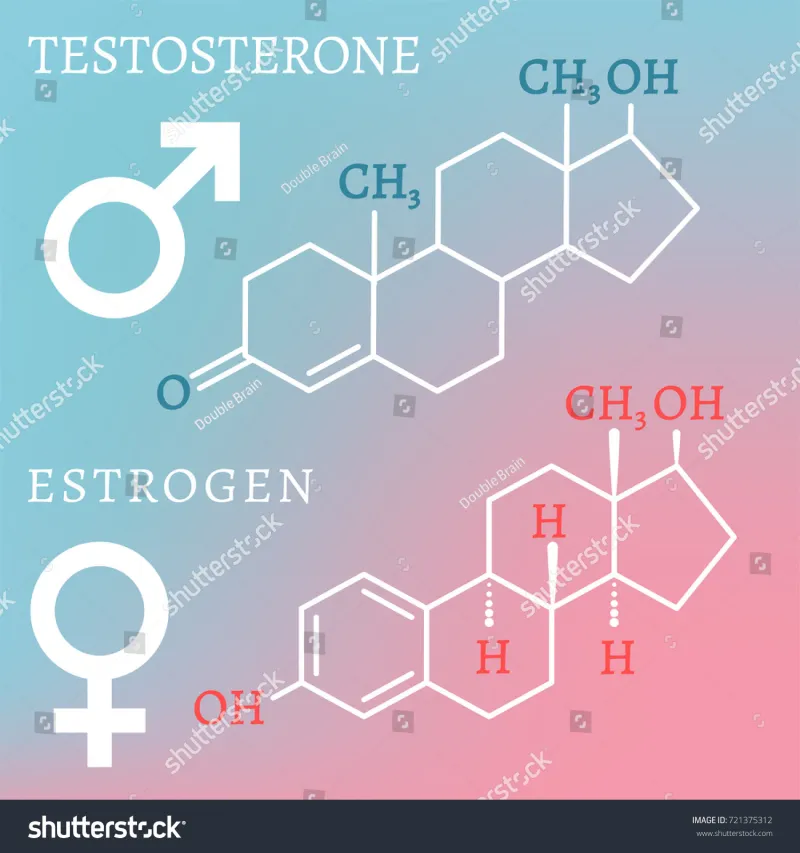
Photo: male hormone balance laboratory science testosterone estrogen molecular, via www.shutterstock.com
Walk through any gym locker room conversation about hormones, browse a men's health forum, or skim the marketing copy on half the testosterone-support products sold in the United States, and you will encounter a persistent narrative: estrogen is the hormone that works against men. It is blamed for fat accumulation, diminished drive, emotional instability, and reduced physical output. The solution, according to this popular view, is straightforward—suppress it.
The clinical evidence, however, does not support that framing. In fact, research published in peer-reviewed endocrinology journals consistently demonstrates that estrogen performs critical physiological functions in the male body, and that driving it too low can produce consequences as damaging as—and in some cases more damaging than—having it too high. For men pursuing genuine performance optimization, the goal should never be elimination. It should be calibration.
The Biological Role Estrogen Actually Plays in Men
Estrogen in men is produced primarily through a process called aromatization, in which the enzyme aromatase converts a portion of circulating testosterone into estradiol, the most biologically active form of estrogen. This is not a malfunction. It is an intentional physiological mechanism.
Estradiol receptors are distributed throughout male tissue—in bone, the cardiovascular system, the brain, and reproductive organs. Each of these systems depends on adequate estradiol signaling to function correctly. Remove that signal, and the consequences become measurable fairly quickly.
In bone tissue, estrogen is responsible for regulating osteoclast activity—the cellular process that breaks down bone. Without sufficient estradiol, bone resorption accelerates, increasing long-term fracture risk and reducing skeletal density. A landmark study published in the New England Journal of Medicine found that estrogen, not testosterone, was the primary hormonal driver of bone maintenance in aging men. This finding was significant enough to shift clinical thinking at major academic medical centers across the country.
In the cardiovascular system, estradiol supports arterial elasticity, helps regulate cholesterol metabolism, and contributes to endothelial function—the health of the inner lining of blood vessels. Men with clinically low estradiol levels have demonstrated measurably impaired cardiovascular markers in multiple longitudinal studies, a fact that deserves considerably more attention in performance communities.
Cognitive Function and the Estrogen Connection
The brain is another site where estradiol exerts meaningful influence in men. Estrogen receptors are present in the hippocampus and prefrontal cortex—regions governing memory consolidation, executive function, and emotional regulation. Research from institutions including Johns Hopkins and the National Institutes of Health has linked low estradiol in men to increased rates of cognitive decline, depressive symptoms, and reduced verbal memory.
For men who prioritize mental sharpness—whether in professional environments, competitive athletics, or demanding personal endeavors—this represents a dimension of hormonal health that is frequently ignored in favor of focusing exclusively on testosterone. The two hormones do not operate in opposition; they operate in concert.
The Optimal Ratio: What the Research Suggests
Endocrinologists and sports medicine physicians who work extensively with male hormone optimization generally look not just at absolute testosterone or estradiol values, but at the ratio between the two. A commonly referenced clinical benchmark places optimal male estradiol in the range of 20 to 30 picograms per milliliter, though this varies based on individual physiology, age, and total testosterone levels.
When testosterone is elevated—whether through natural optimization strategies or exogenous supplementation—aromatization increases proportionally, which can push estradiol above the range associated with peak function. This is the legitimate clinical scenario in which estrogen management becomes relevant. Elevated estradiol in men is associated with increased adipose tissue accumulation, reduced libido, water retention, and in some cases gynecomastia.
However, the appropriate response to elevated estradiol is measured management, not aggressive suppression. The distinction matters enormously.
Why Aromatase Inhibitors Require a Careful Hand
Aromatase inhibitors, commonly referred to as AIs, are pharmaceutical compounds that reduce the conversion of testosterone to estradiol by blocking the aromatase enzyme. In oncology, they are used to treat hormone-sensitive breast cancer. In men's health and performance contexts, they are sometimes employed to manage elevated estradiol.
When used appropriately, under clinical supervision, and calibrated to actual lab values, AIs can be a legitimate tool. The problem arises when they are used indiscriminately—without bloodwork, without professional guidance, and without a clear understanding of what estradiol actually does in the male body.
Men who aggressively suppress estradiol with AIs often report a constellation of symptoms that mirror low testosterone: joint pain, fatigue, reduced libido, mood disruption, and declining bone density markers. These are not coincidental side effects. They are the predictable physiological consequences of depriving estrogen-sensitive tissue of a hormone it requires to operate correctly.
Clinicians working in men's health have documented cases where patients pursuing testosterone optimization actually experienced performance regression because their estradiol had been pushed below functional thresholds. The testosterone was present. The downstream conversion product essential for completing many of testosterone's effects was not.
Lifestyle Factors That Influence Estrogen Balance
Beyond pharmaceutical interventions, several lifestyle variables significantly affect estradiol levels in men. Body fat percentage is among the most influential, as adipose tissue is itself a site of aromatase activity. Men carrying excess visceral fat will generally aromatize testosterone at higher rates, which is one reason that body composition management remains foundational to any hormone optimization effort.
Alcohol consumption, particularly in excess, has been shown to impair the liver's ability to metabolize estrogen, contributing to elevated circulating levels. Certain dietary factors—including cruciferous vegetables containing indole-3-carbinol and compounds like DIM (diindolylmethane)—have demonstrated modest estrogen-modulating effects in clinical literature, though they should be understood as complementary to, not substitutes for, comprehensive hormonal assessment.
Sleep quality, stress management, and zinc status also intersect with aromatase activity and estrogen metabolism in ways that are increasingly well-documented in the endocrinology literature.
The Informed Approach to Hormonal Optimization
For men serious about optimizing their physical output, cognitive performance, and long-term health, the takeaway is clear: hormonal intelligence requires nuance. Testosterone and estradiol are not adversaries. They are components of an integrated endocrine system, and the performance ceiling of that system is determined not by how high testosterone climbs in isolation, but by how well the entire hormonal architecture is calibrated.
Regular bloodwork—including a comprehensive hormone panel that measures total testosterone, free testosterone, estradiol, SHBG, and relevant metabolic markers—provides the data necessary to make informed decisions. Without that data, interventions aimed at estrogen management are, at best, guesswork.
The most effective approach to male hormonal performance is one grounded in physiology rather than popular mythology. Estrogen, managed intelligently, is not a liability. It is a component of the system that, when properly balanced, supports the very outcomes men are working toward: strength, endurance, cognitive clarity, cardiovascular resilience, and sustained vitality.