Normal Numbers, Subpar Results: The Hidden Gap Between Testosterone Production and Testosterone Utilization
Every year, countless American men sit across from a physician, review a standard hormone panel, and hear some variation of the same reassurance: your testosterone looks fine. And on paper, it does. Total testosterone falls within the accepted reference range. The numbers are unremarkable in the best possible sense.
And yet the performance picture tells an entirely different story.
Energy is inconsistent. Recovery from exercise is slower than it should be. Libido is present but muted. Strength gains have plateaued despite disciplined training. Morning motivation — once reliable — has become unpredictable. These are not the symptoms of a man with optimal hormonal function. They are the symptoms of a man whose hormones are not being used effectively, regardless of what the lab report says.
This is the conversion problem — and it is far more common, and far more consequential, than most standard medical workups are designed to detect.
Why Total Testosterone Is an Incomplete Picture
When a standard blood panel measures testosterone, it typically reports total testosterone: the aggregate of all testosterone circulating in the bloodstream, bound and unbound alike. This number captures production volume reasonably well. What it does not capture is biological availability — the fraction of testosterone that is actually free to bind to androgen receptors and initiate the downstream effects men associate with peak performance.
The majority of testosterone in circulation — roughly 98 percent in most men — is bound to carrier proteins. Sex hormone-binding globulin, or SHBG, binds tightly and renders testosterone essentially inert from a functional standpoint. Albumin binds more loosely, and testosterone attached to albumin retains some bioavailability. Only the small fraction that remains completely unbound — free testosterone — is immediately available for cellular uptake.
A man with total testosterone of 650 ng/dL and elevated SHBG may have less functional hormonal activity than a man with total testosterone of 480 ng/dL and low-normal SHBG. The total number, viewed in isolation, obscures this reality entirely.
The Enzyme Layer: Where Conversion Gets Complicated
Beyond the binding problem, testosterone must undergo enzymatic conversion to produce many of its most important effects. Two enzymes are particularly central to this process: aromatase and 5-alpha reductase.
Aromatase converts testosterone into estradiol, a form of estrogen that plays a critical regulatory role in men — including supporting libido, bone density, and cardiovascular health. When aromatase activity is excessive, however, the conversion rate tips out of balance. More testosterone is redirected into estradiol than the system requires, effectively reducing the testosterone available for androgenic functions. Elevated body fat, chronic alcohol consumption, and certain metabolic conditions all upregulate aromatase activity, making this a surprisingly common issue among men who otherwise appear healthy.
5-alpha reductase converts testosterone into dihydrotestosterone, or DHT — a more potent androgen responsible for a range of functions including libido, neurological assertiveness, and certain aspects of physical drive. Impaired 5-alpha reductase activity means less DHT is synthesized even when testosterone levels appear adequate. Zinc deficiency, elevated insulin, and specific genetic variants have all been associated with reduced enzyme efficiency in this pathway.
Neither of these enzymatic conversion rates appears on a standard testosterone panel. Both can be quietly undermining performance in men who have been told their hormones are normal.
Insulin Resistance: The Metabolic Saboteur
One of the most underappreciated drivers of hormonal underperformance in American men is subclinical insulin resistance — a condition that may not yet meet the clinical threshold for a diabetes diagnosis but is already disrupting the hormonal environment in measurable ways.
Chronic hyperinsulinemia — elevated circulating insulin resulting from impaired cellular response — stimulates aromatase activity, raises SHBG production in ways that reduce free testosterone, and promotes the accumulation of visceral adipose tissue, which itself functions as an estrogen-producing endocrine organ. The net effect is a hormonal milieu that looks passable on a basic panel while functioning well below optimal levels.
Fasting insulin and HOMA-IR (a calculated marker of insulin resistance) are not included in most routine hormone evaluations. Yet for men experiencing the symptoms of low testosterone despite normal total testosterone readings, these metabolic markers frequently reveal the underlying mechanism.
Thyroid Function and the Downstream Cascade
Thyroid hormones play a regulatory role in androgen metabolism that receives insufficient attention in performance-focused health conversations. Suboptimal thyroid output — even within the low-normal range of standard TSH testing — affects the liver's production of SHBG, alters the rate of testosterone clearance, and can impair the sensitivity of androgen receptors at the tissue level.
A man with borderline-low free T3 may have normal total testosterone, normal free testosterone, and yet still experience blunted androgenic effects because the cellular machinery required to respond to those hormones is operating inefficiently. This is receptor-level dysfunction, and it sits entirely outside the scope of a testosterone panel.
The Markers Worth Requesting
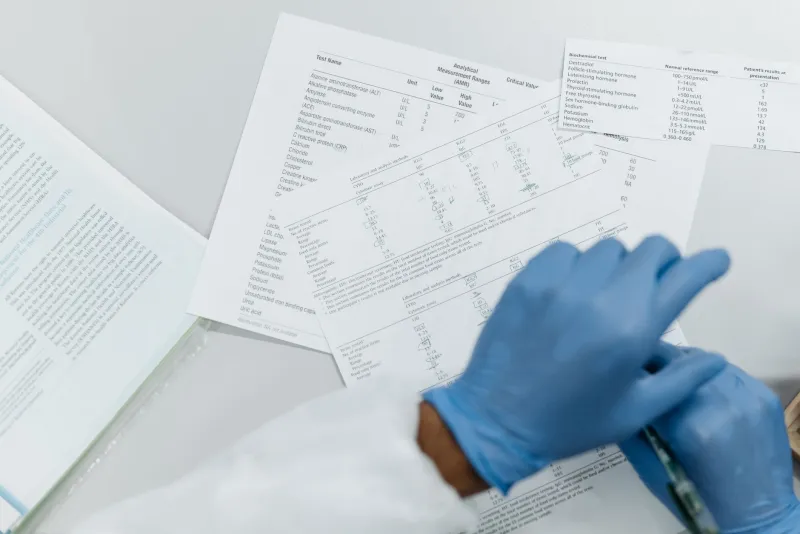
For men who suspect the gap between their lab results and their lived experience may be explained by conversion dysfunction, a more comprehensive hormonal assessment is warranted. The following markers provide a substantially more complete picture than total testosterone alone:
- Free testosterone (direct measurement preferred over calculated estimates)
- Sex hormone-binding globulin (SHBG)
- Estradiol (sensitive assay)
- Dihydrotestosterone (DHT)
- Fasting insulin and HOMA-IR
- Free T3 and reverse T3 (thyroid function beyond TSH)
- Luteinizing hormone (LH) and follicle-stimulating hormone (FSH) to assess the hypothalamic-pituitary axis
This panel transforms a single data point into a functional map of the hormonal system, revealing not just what is being produced but how efficiently the entire cascade is operating.
Addressing the Conversion Problem Strategically
Recognizing conversion dysfunction shifts the approach from chasing a higher total testosterone number to optimizing the system that processes and utilizes the testosterone already being produced.
For men with elevated SHBG, strategies that support healthy liver function and reduce chronic inflammation are frequently prioritized. For those with elevated aromatase activity, body composition improvements, reduced alcohol intake, and targeted nutritional support — including compounds with demonstrated aromatase-modulating properties — may be appropriate. For individuals with impaired 5-alpha reductase efficiency, zinc repletion and insulin sensitivity optimization are common starting points.
Support for these goals is available through evidence-informed supplementation, and the growing market of performance-focused formulations increasingly addresses conversion efficiency rather than simply attempting to elevate raw production numbers. Products designed to support SHBG balance, healthy estrogen metabolism, and androgen receptor sensitivity represent a more sophisticated approach to hormonal optimization than earlier generations of testosterone support supplements.
The Takeaway
A testosterone number on a lab report is a starting point, not a conclusion. For men experiencing the real-world symptoms of hormonal underperformance — regardless of what their total testosterone reads — the more productive question is not how much testosterone am I producing but how effectively is my body converting and utilizing what it already makes.
The gap between those two questions is where the real answers live.