Signal vs. Noise: A Clinically Grounded Guide to Performance Supplements That Deliver Real Results
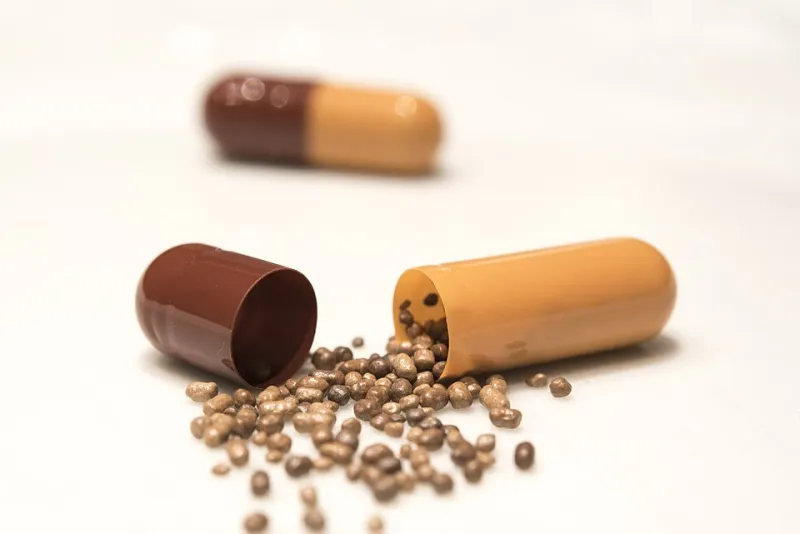
Photo: Patrik Nygren, CC BY-SA 2.0, via Wikimedia Commons
Walk through any vitamin aisle, scroll through any fitness retailer, or open a fitness-adjacent social media feed, and you will encounter an overwhelming volume of performance supplement claims. "Maximize output." "Unlock your potential." "Engineered for elite performance." The language is consistent, aspirational, and — in many cases — almost entirely disconnected from the clinical literature.
This is not an indictment of the supplement industry as a whole. There are compounds with robust, reproducible evidence supporting their efficacy, and there are products built almost entirely on branding. Knowing the difference is not merely useful — for someone spending real money on their health, it is essential.
What follows is a frank, category-by-category breakdown of where the science actually stands.
Tier One: Supplements With Strong, Consistent Clinical Evidence
These compounds have been studied extensively in peer-reviewed settings, with results that replicate across populations and methodologies.
Creatine Monohydrate
If there is a single supplement that the sports science community has reached near-consensus on, it is creatine monohydrate. Hundreds of controlled studies over three decades have consistently demonstrated its ability to increase phosphocreatine stores in muscle tissue, enhance ATP regeneration during high-intensity efforts, and support lean mass accumulation over training cycles.
The effective dose is well-established: 3 to 5 grams daily, with no loading phase required for long-term users. Importantly, the monohydrate form performs equivalently to more expensive proprietary variants such as buffered creatine or creatine HCl in direct comparative studies — making cost-per-dose a legitimate consideration when evaluating products.
Caffeine
Caffeine remains one of the most thoroughly studied ergogenic compounds in existence. Its mechanisms are well understood: it antagonizes adenosine receptors, reducing perceived fatigue, and stimulates the central nervous system in ways that measurably improve endurance performance, power output, and reaction time.
The key variables are dosing and timing. Research consistently identifies 3 to 6 mg per kilogram of body weight as the performance-relevant range, consumed approximately 30 to 60 minutes prior to activity. Chronic high-dose consumption blunts these effects through receptor adaptation — a physiological reality that most pre-workout marketing carefully avoids mentioning.
Magnesium
Frequently overlooked in performance contexts, magnesium participates in over 300 enzymatic reactions in the human body, including those governing muscle contraction, protein synthesis, and energy production. Survey data from the U.S. National Health and Nutrition Examination Survey consistently indicates that a significant percentage of American adults consume below the recommended daily intake.
For athletes and high-output individuals, this gap is compounded by sweat-related losses. Supplementing with highly bioavailable forms — magnesium glycinate or magnesium malate — has demonstrated benefits for sleep quality, recovery speed, and, in men with low baseline levels, measurable improvements in testosterone parameters.
Tier Two: Promising Evidence, With Meaningful Caveats
These compounds show genuine utility in the research literature, but with important qualifications around population specificity, dosing, or study design.
Ashwagandha (Withania somnifera)
Ashwagandha has accumulated a credible body of evidence, particularly around cortisol reduction and its downstream effects on stress-related fatigue and reproductive hormone balance. Several randomized controlled trials have documented statistically significant reductions in serum cortisol and, in men with below-average testosterone baselines, meaningful improvements in total testosterone levels.
The caveat: effects are most pronounced in individuals with elevated stress markers or suboptimal hormonal baselines. For men already operating within healthy reference ranges, the magnitude of benefit is more modest. Standardized KSM-66 or Sensoril extracts are the forms used in most positive trials — generic root powder at low doses is unlikely to replicate these outcomes.
Citrulline Malate
Citrulline has largely supplanted arginine in evidence-based pre-workout formulations, owing to its superior oral bioavailability. It functions as a precursor to nitric oxide, supporting vasodilation and blood flow to working muscles. Research indicates meaningful reductions in exercise-induced fatigue and improved repetition performance in resistance training at doses of 6 to 8 grams of citrulline malate.
The caveat here is product-level: many pre-workouts list citrulline on the label but include it in proprietary blends at doses well below the studied threshold. Label transparency is therefore a critical purchase criterion.
Vitamin D3
Vitamin D functions more as a hormone precursor than a traditional vitamin, and its role in testosterone synthesis, immune function, and muscle performance is well-documented. Deficiency is endemic in the United States, particularly in northern latitudes and among individuals with limited sun exposure.
Supplementation at 2,000 to 4,000 IU daily is broadly considered safe and appropriate for most adults without documented toxicity risk. However, supplementing without addressing a confirmed deficiency yields diminishing returns — making baseline testing a worthwhile first step.
Tier Three: Marketing-Driven Claims With Weak or Absent Evidence
This category includes ingredients that appear frequently on supplement labels but whose clinical support ranges from preliminary to essentially nonexistent.
Branched-Chain Amino Acids (BCAAs) as a standalone product represent perhaps the most commercially successful example. When total daily protein intake is adequate — which it typically is for individuals eating purposefully — BCAA supplements provide no additive benefit for muscle protein synthesis. The amino acids are already present in dietary protein. Their continued commercial dominance is a marketing achievement, not a scientific one.
Proprietary "testosterone booster" blends with undisclosed dosing of individual ingredients fall into a similar category. Ingredients like fenugreek and tribulus terrestris appear in numerous products, but the clinical evidence for meaningful hormonal impact at commercially used doses is inconsistent at best. Transparency in labeling — specifically, disclosed amounts of each ingredient — is the minimum standard a credible product should meet.
Collagen protein has seen remarkable growth in the wellness market, but as a standalone protein source for muscle building, it is nutritionally inferior to whey, casein, or plant-based complete proteins due to its incomplete amino acid profile. Its utility is more specific: connective tissue support, for which emerging research shows genuine promise.
A Framework for Smarter Purchasing
The practical takeaway from reviewing the evidence landscape is straightforward. Prioritize supplements with identified mechanisms of action, peer-reviewed support, and transparent labeling that specifies exact doses. Approach proprietary blends with scrutiny, particularly when individual ingredient amounts are concealed.
The supplement market rewards consumer sophistication. The more precisely a buyer can evaluate an ingredient panel against the published literature, the less likely they are to fund formulations built primarily around packaging and positioning.
Performance supplementation, done correctly, is a legitimate and measurable contributor to physical output and recovery. Done carelessly, it is simply an expensive habit. The difference lies almost entirely in the quality of the decision being made at the point of purchase.