Produced but Never Activated: The Cellular Gap That Explains Why Hormones Fail to Deliver

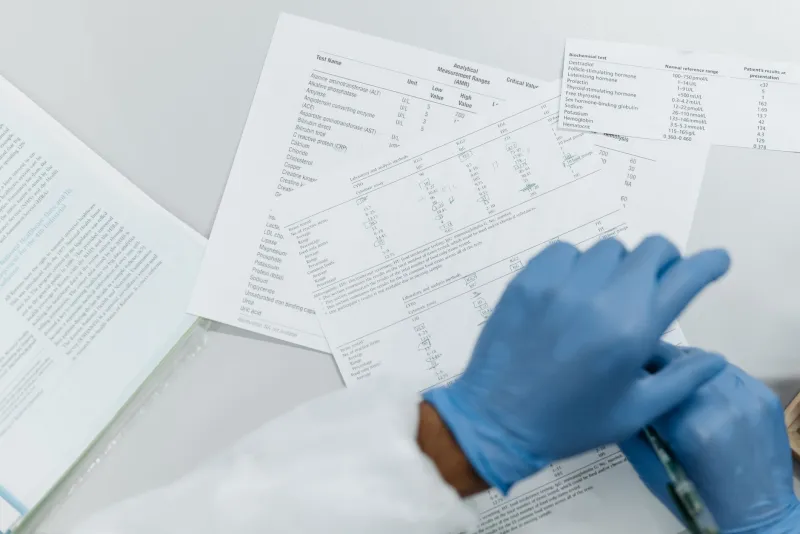
Consider two men, both in their early forties, both with testosterone readings that fall comfortably within reference ranges. One reports strong energy, consistent drive, and productive training sessions. The other feels perpetually flat—low libido, sluggish recovery, diminished focus—despite no measurable deficiency on paper. Their physicians find nothing to treat. Their labs look fine.
This scenario is not unusual. It reflects a fundamental blind spot in how hormonal health is conventionally assessed: the assumption that adequate production equals adequate function. In reality, between the moment a hormone is synthesized and the moment it exerts a biological effect at the cellular level, a complex sequence of biochemical events must occur—and any disruption along that sequence can render even well-produced hormones functionally inert.
This is the activation gap. And for a significant portion of men experiencing suboptimal performance, it is the actual problem.
What "Hormone Activation" Actually Means
When endocrinologists measure circulating hormone levels, they are capturing a snapshot of what is present in the bloodstream. What those numbers do not reveal is whether the hormone is bioavailable, whether it is being converted into its active form, whether it is binding to receptors with sufficient affinity, or whether those receptors are even present in adequate numbers.
Testosterone, for example, must undergo enzymatic conversion to dihydrotestosterone (DHT) in certain tissues via the enzyme 5-alpha reductase, or to estradiol via aromatase—each conversion serving specific physiological functions. Thyroid hormones follow a parallel pattern: the thyroid gland primarily secretes T4, a relatively inactive prohormone that must be converted to the active T3 form by deiodinase enzymes in peripheral tissues. If that conversion is impaired—by nutritional deficiencies, chronic inflammation, or elevated cortisol—circulating T4 can appear normal while cellular energy metabolism remains compromised.
In both cases, the standard blood panel misses the actual point of failure.
The Receptor Expression Problem
Beyond conversion, there is the matter of receptor availability. Hormones function by binding to specific receptors—either on the cell surface or within the nucleus—triggering downstream signaling cascades. If receptor expression is downregulated, the hormone may be present and even active, yet unable to communicate its message effectively.
Androgen receptor (AR) expression varies considerably between individuals and can be further influenced by lifestyle factors, chronic stress, sleep quality, and inflammatory load. Research has demonstrated that systemic inflammation—particularly elevated interleukin-6 and TNF-alpha—can suppress androgen receptor expression in muscle tissue, which is precisely the tissue where testosterone's anabolic signaling matters most. A man with borderline-low inflammation markers and optimal testosterone may actually outperform a man with higher testosterone and a more significant inflammatory burden.
This is why addressing the inflammatory environment is not peripheral to hormonal optimization—it is central to it.
Co-Factor Availability: The Underappreciated Bottleneck
Enzymatic conversion does not occur in isolation. Every conversion pathway depends on specific micronutrients acting as co-factors—substances without which the enzymes involved cannot function at full capacity.
Deiodinase enzymes, which convert T4 to active T3, are selenium-dependent. A meaningful proportion of American men consume insufficient selenium relative to optimal enzymatic activity, not because their diets are severely deficient, but because modern agricultural soil depletion has quietly reduced the selenium content of common foods. The result is a conversion bottleneck that standard thyroid panels rarely detect.
Similarly, the 5-alpha reductase enzyme—responsible for converting testosterone to DHT in tissues including the prostate, skin, and brain—requires zinc as a co-factor. Zinc deficiency is among the most prevalent micronutrient shortfalls in adult men in the United States, and its consequences extend well beyond immune function into the hormonal activation cascade.
Magnesium, vitamin D (which functions as a steroid hormone precursor rather than a conventional vitamin), and specific B vitamins each participate in receptor signaling, gene transcription, and enzymatic activity at various points along the hormonal activation pathway. Optimizing these co-factors is not supplementation for its own sake—it is addressing genuine biochemical prerequisites.
Cortisol's Role as an Activation Disruptor
Chronic stress introduces another layer of complexity. Elevated cortisol does not merely suppress testosterone production at the hypothalamic-pituitary level—it also interferes with activation downstream. Cortisol competes with testosterone for binding at glucocorticoid receptors in overlapping tissue regions, and chronically elevated cortisol has been associated with reduced androgen receptor sensitivity in multiple tissue types.
Furthermore, cortisol elevates the production of sex hormone-binding globulin (SHBG), the protein that renders testosterone biologically unavailable. Even if free testosterone remains technically measurable, the effective concentration reaching androgen receptors in target tissues may be substantially lower than the number suggests.
For men under persistent occupational, financial, or psychological stress—a condition that characterizes a substantial segment of middle-aged American men—cortisol management is not a wellness luxury. It is a prerequisite for any hormonal optimization strategy to function as intended.
Practical Implications for the Optimization-Minded Man
Addressing the activation gap requires a more granular diagnostic and interventional approach than most conventional frameworks offer. Several practical considerations emerge from the science:
Assess conversion markers, not just circulating levels. Free T3, reverse T3, DHT, and free testosterone provide meaningful data that total hormone panels do not. Understanding the ratio of active to inactive forms reveals where conversion efficiency is being lost.
Audit co-factor status systematically. Selenium, zinc, magnesium, and vitamin D levels are measurable and correctable. Targeted repletion—rather than broad multivitamin supplementation—addresses specific enzymatic bottlenecks with greater precision.
Reduce the inflammatory load. Anti-inflammatory dietary patterns, omega-3 fatty acid intake, and sleep quality each influence receptor expression in ways that can meaningfully shift the functional impact of available hormones.
Address cortisol chronically, not acutely. Adaptogenic compounds, structured recovery protocols, and sleep architecture optimization are among the evidence-informed approaches to managing cortisol's suppressive influence on hormonal activation.
Consider receptor sensitivity as a training variable. Resistance exercise, in particular, has been shown to upregulate androgen receptor density in skeletal muscle—essentially increasing the cellular capacity to respond to available testosterone.
The Broader Principle
Hormone optimization is frequently framed as a production problem. The clinical conversation tends to center on whether levels are within range or below it, and whether intervention is warranted to raise them. What this framework consistently underweights is the activation problem—the multiple-step biochemical sequence that determines whether produced hormones ever reach their functional destination.
For men who have optimized production and still find themselves underperforming relative to expectations, the activation gap is the logical next frontier. It is not a fringe concept. It is established biochemistry that has simply not yet found its way into mainstream clinical practice with the consistency it deserves.
The men who understand this distinction—and address it systematically—are the ones who close the gap between what their labs show and what their bodies actually deliver.