Bound and Useless: The SHBG Problem That Explains Why Your Testosterone Isn't Working
You did everything right. You went to your physician, requested the bloodwork, and waited for answers. The results came back with your testosterone sitting comfortably inside the normal reference range. Your doctor nodded, told you everything looked fine, and sent you home. Yet the fatigue persists. The drive is gone. The strength you used to carry into every workout has quietly packed up and left.
This is one of the most frustrating and underdiagnosed performance gaps in men's health — and it has a name: the conversion problem.
The issue is not production. The issue is access.
Total Testosterone Tells You Almost Nothing Useful on Its Own
When most physicians order a testosterone panel, they measure total testosterone — the aggregate of every testosterone molecule circulating in your bloodstream at that moment. It is a blunt instrument. What the number does not tell you is how much of that testosterone is actually free to bind to androgen receptors, enter your cells, and drive the biological effects you care about: energy, libido, muscle protein synthesis, mental sharpness, and sexual performance.
Testosterone does not travel through the bloodstream unattended. The majority of it — roughly 98 percent in most men — is bound to carrier proteins. Approximately 44 percent is tightly bound to sex hormone-binding globulin (SHBG), and another 54 percent is loosely bound to albumin. Only the remaining fraction, somewhere between 1 and 3 percent, is considered truly free testosterone: immediately bioavailable and ready to perform its function at the cellular level.
Albumin-bound testosterone is weakly attached and can release relatively easily. SHBG-bound testosterone, however, is essentially locked out of the game. It circulates, it shows up on your total count, and it does absolutely nothing for your performance.
SHBG: The Protein That's Quietly Holding You Back
Sex hormone-binding globulin is produced primarily in the liver, and its job — in simplified terms — is to regulate how much active testosterone (and estrogen) is available to tissues at any given time. In appropriate concentrations, SHBG serves a legitimate physiological purpose. When levels climb too high, however, it becomes a performance ceiling.
Elevated SHBG effectively neutralizes testosterone before it can act. You can have a total testosterone reading of 650 ng/dL — a number that looks reassuring on paper — while your free testosterone sits at a level more consistent with someone producing a fraction of that. The raw number looks healthy. The functional output does not match.
What drives SHBG upward? Several factors are well-documented. Aging is among the most significant; SHBG tends to rise progressively after the mid-thirties. Elevated thyroid hormone, chronic caloric restriction, high dietary fiber intake in excess, and certain medications — including statins and some antiepileptics — have all been associated with increased SHBG. Excess alcohol consumption and liver stress can also interfere with SHBG regulation.
Insulin resistance, interestingly, tends to suppress SHBG — which is why men with metabolic syndrome or type 2 diabetes often show low SHBG alongside low free testosterone, a different but equally problematic dynamic.
Why Standard Blood Panels Miss This Entirely
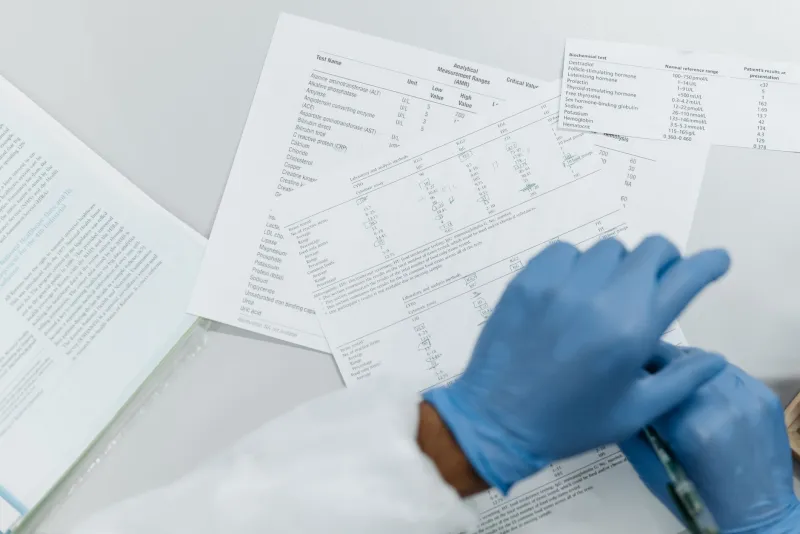
Here is where the system fails the average American man seeking real answers: the majority of routine testosterone panels do not include free testosterone or SHBG measurements unless specifically requested. A general practitioner ordering a standard hormone panel will typically receive only a total testosterone figure. Without the full picture, the interpretation is incomplete at best and misleading at worst.
Free testosterone can be measured directly — though the assay methodology matters significantly, as some direct measurement techniques are considered less accurate than calculated methods. The most reliable approach involves measuring total testosterone, SHBG, and albumin, then calculating free testosterone using an established formula. The Vermeulen equation is widely referenced in clinical literature for this purpose.
If you have been told your testosterone is normal but continue to experience symptoms consistent with androgen deficiency — diminished libido, persistent fatigue, reduced muscle mass, mood disruption, cognitive fog — requesting a full panel that includes SHBG and calculated free testosterone is a reasonable and informed next step.
Strategies to Shift the Balance Toward Bioavailable Testosterone
Addressing elevated SHBG is not a simple switch, but the levers available are real and worth understanding.
Optimize body composition. Excess adipose tissue — particularly visceral fat — disrupts hormonal signaling in multiple directions. While obesity is associated with lower SHBG, the accompanying increases in aromatase activity (which converts testosterone to estrogen) and inflammation create their own suppressive environment. Achieving and maintaining a lean body composition supports healthier hormonal dynamics across the board.
Revisit dietary fat intake. Research has consistently associated dietary fat — particularly monounsaturated and saturated fat from whole food sources — with testosterone production and, to some degree, SHBG modulation. Extremely low-fat diets have been linked to reduced androgen output and potentially elevated SHBG in some populations.
Address insulin sensitivity. Improving insulin sensitivity through resistance training, carbohydrate management, and strategic supplementation supports a more favorable hormonal environment. Compounds such as berberine and magnesium have been studied in the context of insulin signaling and may carry secondary benefits for hormonal balance.
Consider targeted supplementation. Certain compounds have demonstrated meaningful effects on SHBG or free testosterone availability in clinical research. Boron is among the most studied; human trials have shown that even modest boron supplementation can measurably reduce SHBG and increase free testosterone within weeks of consistent use. Zinc deficiency is also closely tied to elevated SHBG and depressed testosterone, making repletion a logical starting point for men whose intake is suboptimal.
Reduce chronic stress load. Cortisol and testosterone operate in opposition. Sustained cortisol elevation — driven by inadequate sleep, psychological stress, or overtraining — suppresses the hypothalamic-pituitary-gonadal axis and compounds the hormonal deficit. Managing the stress response is not peripheral to this conversation; it is central to it.
The Number on the Lab Report Is Not the Final Word
Peak hormonal performance is not a matter of reaching a number on a reference range. It is a matter of ensuring that the hormones your body produces are actually reaching their target tissues and driving the outcomes that define physical and sexual vitality.
Total testosterone is the starting point of an investigation, not the conclusion. For any man experiencing a gap between what his bloodwork suggests and what his body is actually delivering, SHBG is the variable most likely to explain that disconnect.
Understanding the distinction between total and free testosterone — and actively working to shift the ratio in your favor — is one of the most clinically grounded and overlooked strategies in men's performance optimization. The tools to address it exist. The information to pursue it intelligently is available. The first step is refusing to accept a single number as the full answer.