From Warehouse to Porch: The Thermal Journey That Decides Whether Your Supplement Still Works
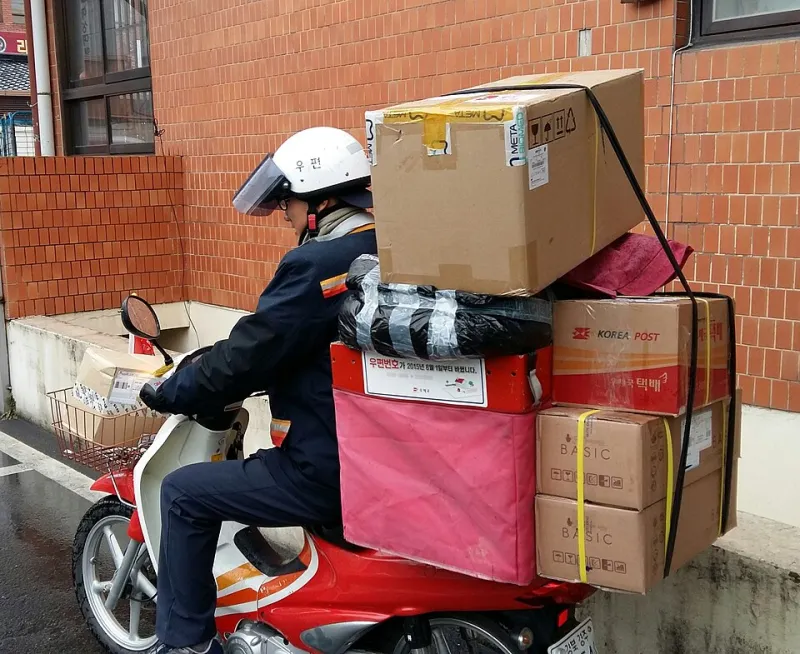
Photo: Roadgo, CC BY-SA 3.0, via Wikimedia Commons
The label on a supplement bottle describes what was in the product on the day it was manufactured. It does not describe what is in the product on the day it reaches your front door. Between those two moments lies a leg of the supply chain that is rarely discussed in marketing material and almost never measured: the transit window, during which a finished product sits inside trucks, sorting facilities, and delivery vehicles that are not climate controlled.
The Unmeasured Leg
A well-run manufacturer validates stability under defined conditions — typically controlled temperature and relative humidity, monitored over months. Those studies are legitimate and usually well executed. The gap is that they model storage, not transit. A pallet that spends six hours on a tarmac in Phoenix in July, then another four in the back of a delivery van, has experienced conditions that no accelerated stability protocol was designed to anticipate.
The interior of a closed vehicle in direct summer sun can reach well above ambient air temperature. Mailboxes, parcel lockers, and unshaded porches add further exposure on the final and often longest leg — the hours between delivery and retrieval, when the package sits unsupervised.
How Heat Acts on Different Dosage Forms
Not all products degrade at the same rate, and not all degradation is visible.
Softgels are among the most vulnerable. Gelatin and vegetarian shells soften, then may fuse, leak, or adhere to one another. Oxidation of the oils inside accelerates markedly at elevated temperature, and a rancid oil is not merely less potent — it is a different chemical entity.
Two-piece hard capsules can warp, become brittle, or develop a sticky surface. Moisture uptake causes the shell to swell and can lead to cross-linking, a process in which the gelatin becomes insoluble and the capsule fails to dissolve in the digestive tract. The product is swallowed, but never released.
Tablets are more physically robust but not immune. Humidity drives hydrolysis, and coated tablets can blister or mottle. Effervescent formats are acutely moisture-sensitive.
Powders present the largest surface area and therefore the fastest reaction to both heat and humidity. Hygroscopic ingredients clump, and fat-soluble actives are prone to oxidation.
Pharmaceutical products, including those supplied through direct-to-consumer channels, are governed by tighter stability requirements and better packaging, but the same physics applies. A blister pack offers meaningful protection; a loose tablet in a pouch does not.
The Humidity Variable
Temperature tends to receive all the attention, but relative humidity is often the more destructive factor. Hydrolytic degradation — the cleavage of a molecule by water — proceeds faster at higher temperature and higher moisture. Desiccant packets are a partial defense, but a desiccant has finite capacity. Once saturated, it stops working and may, in a sealed container, become a reservoir that returns moisture to the product.
What Packaging Should Be Doing
Induction seals, blister cavities, sealed softgel pouches, and desiccant sachets are not decorative. They are functional barriers, and their integrity should be verifiable on arrival. A bottle whose induction seal is intact has been protected since filling; one whose seal is loose, bubbled, or missing has an unknown history. Capsules that arrive stuck together, softgels that arrive fused into a mass, or powder that has formed a solid brick should be treated as compromised regardless of what the expiration date states. The date is a storage-condition-dependent estimate, not a guarantee.
Delivery Timing as a Consumer Decision
There is more leverage here than most buyers realize. Scheduling delivery for a weekday when someone is home, using a pickup location or locker, and avoiding orders that will arrive during a heat wave are all reasonable mitigations. Where a retailer offers insulated packaging or cold-chain shipping for temperature-sensitive items, that option reflects a genuine difference in handling rather than a marketing flourish. A package that arrives warm to the touch has spent time warm; how long is impossible to know.
Storage After Arrival
The most common error occurs after the product is safely inside. Kitchens and bathrooms are the worst storage locations in a typical American home — one is humid by function, the other by steam. A high shelf in a hallway closet, away from light and away from the shower, is generally a better choice. Refrigeration is appropriate only when the label specifies it; for many products, condensation on removal from a refrigerator causes more moisture exposure than room temperature storage would.
A Reasonable Standard for Direct-to-Door Retail
The convenience of ordering performance and potency products for home delivery is genuine, and it is not going away. What should accompany it is transparency: disclosure of storage conditions at the fulfillment center, packaging appropriate to the product form, and a straightforward return path for goods that arrive in an obviously degraded state. Consumers who inspect seals, note the condition of the product on arrival, and store it sensibly are performing the last step in a chain of custody that began long before the order was placed.
This article is editorial content. Consult the product label and a qualified professional regarding storage and use.