Your Vascular Architecture Is the Foundation of Every Performance Goal You Have
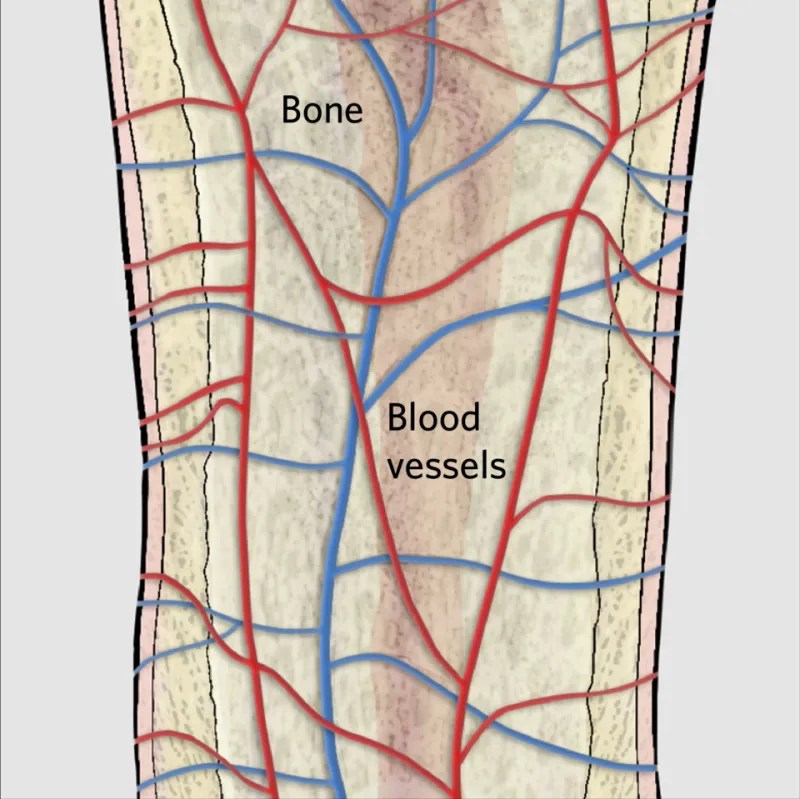
Photo: Mohsin ALi, CC BY-SA 4.0, via Wikimedia Commons
Consider two men with identical training programs, comparable body composition, and similar supplement protocols. One recovers faster, lifts heavier, sustains endurance longer, and reports markedly better sexual function. The other plateaus, fatigues early, and gradually disengages from training altogether. The difference between them is rarely attributed to its true cause: the structural and functional quality of their cardiovascular architecture.
Blood flow is not a passive background process. It is the delivery mechanism for oxygen, nutrients, hormones, and pharmaceutical compounds to every tissue in the body. The efficiency of that delivery — governed by endothelial health, arterial compliance, nitric oxide bioavailability, and capillary density — determines how much of your effort, your nutrition, and your supplementation actually reaches the target. Optimize the architecture, and everything else works better. Neglect it, and no stack compensates for the deficit.
The Endothelium: A Single Cell Layer That Controls Everything
The endothelium is a continuous cellular lining spanning the interior surface of every blood vessel in the body. In a healthy adult, it covers an area roughly equivalent to a football field. Its functions extend far beyond passive containment of blood. The endothelium actively regulates vascular tone, mediates inflammatory responses, controls platelet aggregation, and — most critically for performance — produces nitric oxide (NO).
Nitric oxide is a gaseous signaling molecule synthesized from L-arginine by the enzyme endothelial nitric oxide synthase (eNOS). It causes smooth muscle relaxation in arterial walls, producing vasodilation — the widening of blood vessels that increases blood flow. This mechanism is central to muscular performance during exercise, erectile function, cognitive blood flow, and cardiac output under exertion.
Endothelial dysfunction — the impaired ability of the endothelium to produce and respond to nitric oxide — is now recognized as an early, measurable marker of cardiovascular disease. It is also directly associated with reduced exercise capacity, slower recovery, and sexual dysfunction. Importantly, endothelial dysfunction can exist years before any clinical cardiovascular event, making it both an early warning system and an actionable target.
Nitric Oxide: The Master Regulator of Physical and Sexual Performance
The connection between nitric oxide and sexual performance is not incidental — it is mechanistic. Penile erection is a vascular event. Arterial inflow must exceed venous outflow, a process initiated by nitric oxide release from both endothelial cells and local nerve terminals. This is precisely the pathway targeted by phosphodiesterase type 5 (PDE5) inhibitors, the class of compounds that includes some of the most widely prescribed pharmaceutical interventions in men's health. These agents work not by creating nitric oxide, but by preventing its degradation — amplifying a signal that must already be present in meaningful quantity.
This distinction matters practically. A man with severely compromised endothelial function and low baseline nitric oxide bioavailability will receive less benefit from pharmaceutical support than one whose vascular architecture is fundamentally sound. Building vascular health is not merely complementary to pharmaceutical intervention — it is the substrate upon which that intervention depends.
In the context of athletic performance, the logic is identical. Nitric oxide-mediated vasodilation determines how efficiently oxygen and substrates reach working muscle during high-intensity effort. Greater capillary density — the number of capillaries per unit of muscle tissue — determines how much surface area is available for that exchange. Both variables are trainable and nutritionally modifiable.
Arterial Compliance and Why Stiffness Costs You
Arterial stiffness — the loss of elastic recoil in large conduit arteries like the aorta — is an independent predictor of cardiovascular risk and a direct limiter of performance. Stiff arteries transmit more pulsatile force to small vessels and capillary beds, increasing peripheral resistance and reducing the efficiency of cardiac output. For the performance-focused individual, this translates to a higher cardiovascular cost for the same workload — you expend more cardiac effort to deliver the same volume of blood.
Arterial compliance declines with age, but it is also significantly influenced by lifestyle factors, dietary patterns, and chronic inflammation. This means it is a modifiable variable — not simply an inevitable consequence of aging.
Evidence-Based Strategies for Vascular Optimization
Nutritional Interventions
Dietary nitrate, found in high concentrations in beets, arugula, and spinach, is converted to nitric oxide via a bacteria-mediated pathway in the mouth and gut — a parallel route to the enzymatic pathway that becomes important when eNOS activity is compromised. Beetroot extract and concentrated dietary nitrate supplementation have demonstrated measurable improvements in exercise economy and time-to-exhaustion in multiple controlled trials, making them a legitimate vascular support strategy.
L-arginine and L-citrulline are the amino acid precursors to enzymatic nitric oxide synthesis. Citrulline in particular demonstrates superior oral bioavailability compared to arginine and has shown consistent effects on plasma arginine levels and exercise performance at doses of 6–8 grams. Omega-3 fatty acids (EPA and DHA) support endothelial function through anti-inflammatory mechanisms and have demonstrated improvements in arterial compliance in clinical studies.
Flavonoid-rich compounds — particularly those derived from cocoa, green tea, and grape seed extract — have documented endothelium-protective effects, improving flow-mediated dilation in human trials. These are accessible, well-tolerated additions to a vascular health protocol.
Pharmaceutical and Clinical Pathways
For men with clinically identified endothelial dysfunction or confirmed vascular contributors to sexual performance decline, pharmaceutical options exist beyond the well-known PDE5 inhibitor class. Low-dose daily protocols have shown advantages over on-demand use for men seeking sustained vascular support. In some clinical contexts, low-dose aspirin therapy, statin use, and other physician-directed interventions carry meaningful endothelial benefits beyond their primary indications.
Any pharmaceutical strategy in this domain should be directed by a qualified healthcare provider following appropriate diagnostic workup, including assessment of lipid panels, inflammatory markers such as hs-CRP, and where indicated, direct measurement of arterial stiffness via pulse wave velocity.
Behavioral Optimization
Aerobic exercise remains the single most potent non-pharmacological stimulus for endothelial adaptation. Zone 2 training — sustained moderate-intensity cardiovascular work — produces shear stress on endothelial walls that upregulates eNOS expression over time, effectively building vascular capacity. High-intensity interval training (HIIT) provides complementary adaptations, including improvements in capillary density within skeletal muscle.
Smoking cessation is non-negotiable in this context. The endothelial damage associated with tobacco use is rapid, well-characterized, and only partially reversible. For men who smoke and are simultaneously pursuing performance optimization, the vascular ceiling imposed by ongoing tobacco exposure is likely the dominant limiting factor across all performance domains.
Sleep quality influences vascular health through multiple mechanisms, including nocturnal blood pressure dipping and endothelial repair processes that are preferentially active during deep sleep stages.
Infrastructure Before Intensity
The performance conversation in the United States has long centered on inputs: what to take, how much to lift, how hard to push. The vascular dimension reframes the question. Before asking how to maximize output, it is worth asking whether the infrastructure can carry the load. Endothelial function, arterial compliance, and capillary architecture are not background variables — they are the physical basis upon which every other performance goal is built. Invest in the foundation, and the entire structure rises with it.